Visual Culture视觉文化 · Industry Overview行业概览
What a Repeated Frame Can Communicate
Returning to a similar image can make change visible, but only when the difference has a clear place in the sequence.
Key takeaways核心要点
- A repeated frame creates a comparison, not an automatic theme.
- Keep enough stable elements for viewers to recognize the return.
- Change one meaningful variable before adding visual flourishes to the repeat.
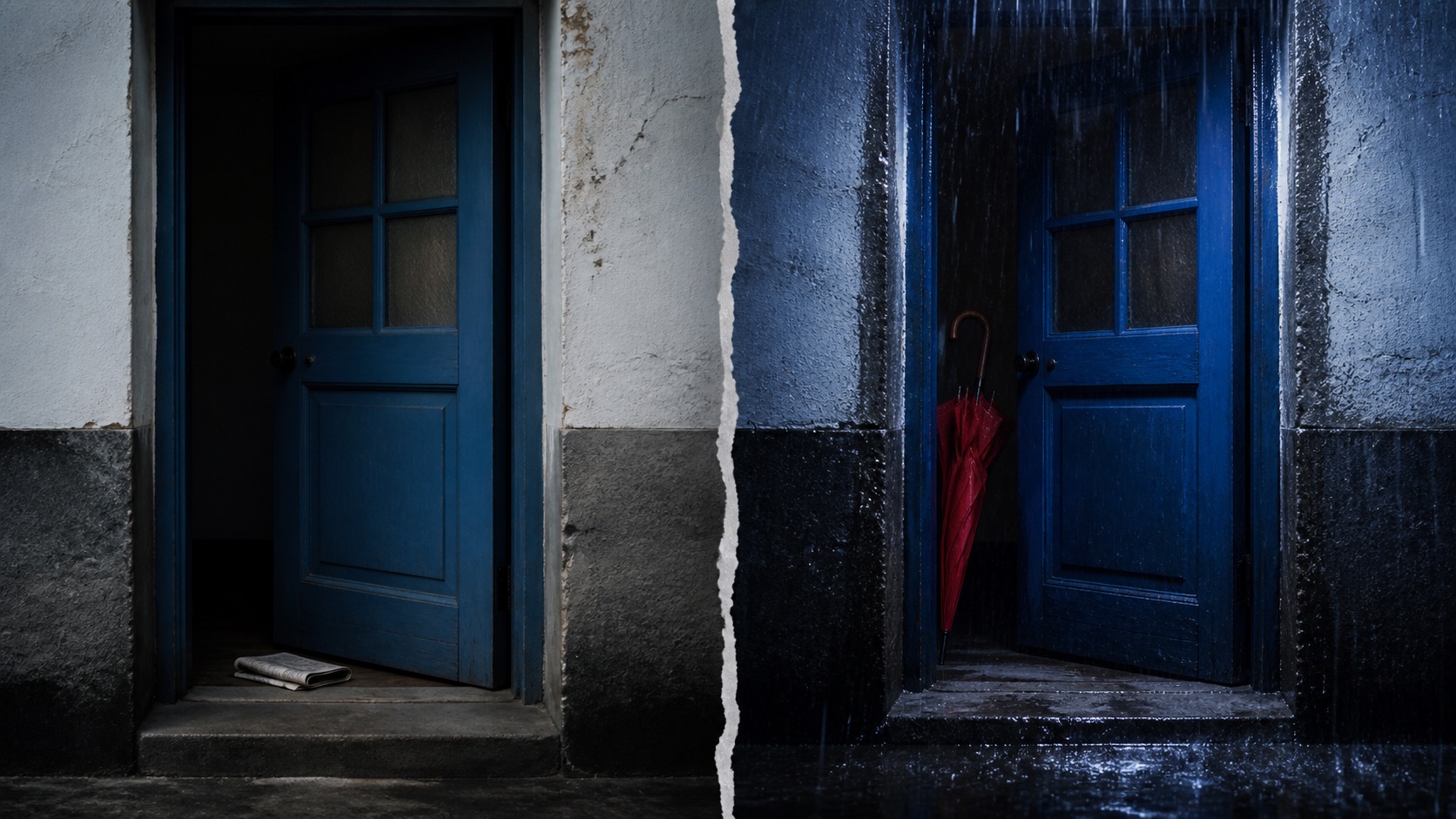
Repetition gives viewers something to compare. When a doorway, chair, interface, or camera position returns, the frame invites a question: what is the same, and what no longer is? The answer might be emotional, practical, or simply spatial. The power of the return comes from that comparison. A repeated image is not meaningful because it repeats; it is meaningful because the sequence makes the difference worth noticing.
This is useful in short-form work, where time is limited and a familiar composition can carry new information quickly. It also asks for discipline. If too much changes between appearances, the return may not register. If nothing changes, the frame can feel like a pause without pressure.
Preserve an anchor for memory
For a return to be legible, a few elements must remain stable. The same low angle, a distinctive window shape, a repeated alignment of hands, or a familiar block of interface text can act as an anchor. The audience does not need to recognize every formal detail consciously. It only needs enough continuity to sense that the current image is in conversation with an earlier one.
Imagine a fictional story in which a person checks an apartment mailbox at the beginning and end of a day. In both images, the metal doors and hallway light are visible. Early on, the person stands close to the box; later, they wait a step back while holding an unopened envelope. The location is stable, but distance and object use have changed. The repeated frame lets the viewer feel a shift without requiring a spoken summary.
Change one thing that matters
The best first question is not “How can we make the repeat more dramatic?” It is “What has changed in the situation?” A new prop, altered posture, missing person, or changed direction of gaze may be enough. Loading the second frame with different lighting, wardrobe, camera movement, and background action can obscure the specific comparison the return was meant to create.
This does not require a rigid rule of one variable only. A scene may need several changes. But naming the primary one helps the team protect it. If the job is to show that a routine has become uncomfortable, the viewer should be able to see that discomfort before being asked to admire the new styling.
Use recurrence to manage time
Repeated frames can compress time, establish habit, or show that a familiar place has acquired a different charge. They are especially useful when a story needs to move between moments without a long explanation. The recurrence says, in effect, “we have been here before; compare this arrival with the last one.”
The editor can test that claim by watching the two frames with their immediate neighbors. Does the first appearance give the later one enough context? Is the interval long enough for memory to matter but not so long that the relation disappears? If a viewer could mistake the return for an unrelated location, a clearer anchor may be needed.
Avoid turning the frame into a riddle
Repetition can become self-conscious when it asks viewers to solve a code rather than follow a scene. A motif does not need a single correct interpretation. It needs a visible relationship to the story’s changing circumstances. Let the repeated image offer evidence, then let viewers decide how much significance to give it.
Used this way, a return is an act of trust. It assumes viewers can remember a shape, notice a deviation, and carry that observation forward. The image does not announce its theme. It creates the conditions for the theme to be felt.