Visual Culture视觉文化 · Production Method制作方法
Making a Location Feel Specific
Specificity comes from the relationships, routines, and material clues a scene observes—not from adding generic visual clutter.
Key takeaways核心要点
- Choose a few observable relationships in a place instead of a catalog of generic details.
- Let routine, access, and sound support visual specificity.
- Avoid treating a location as a stereotype or a decorative backdrop.
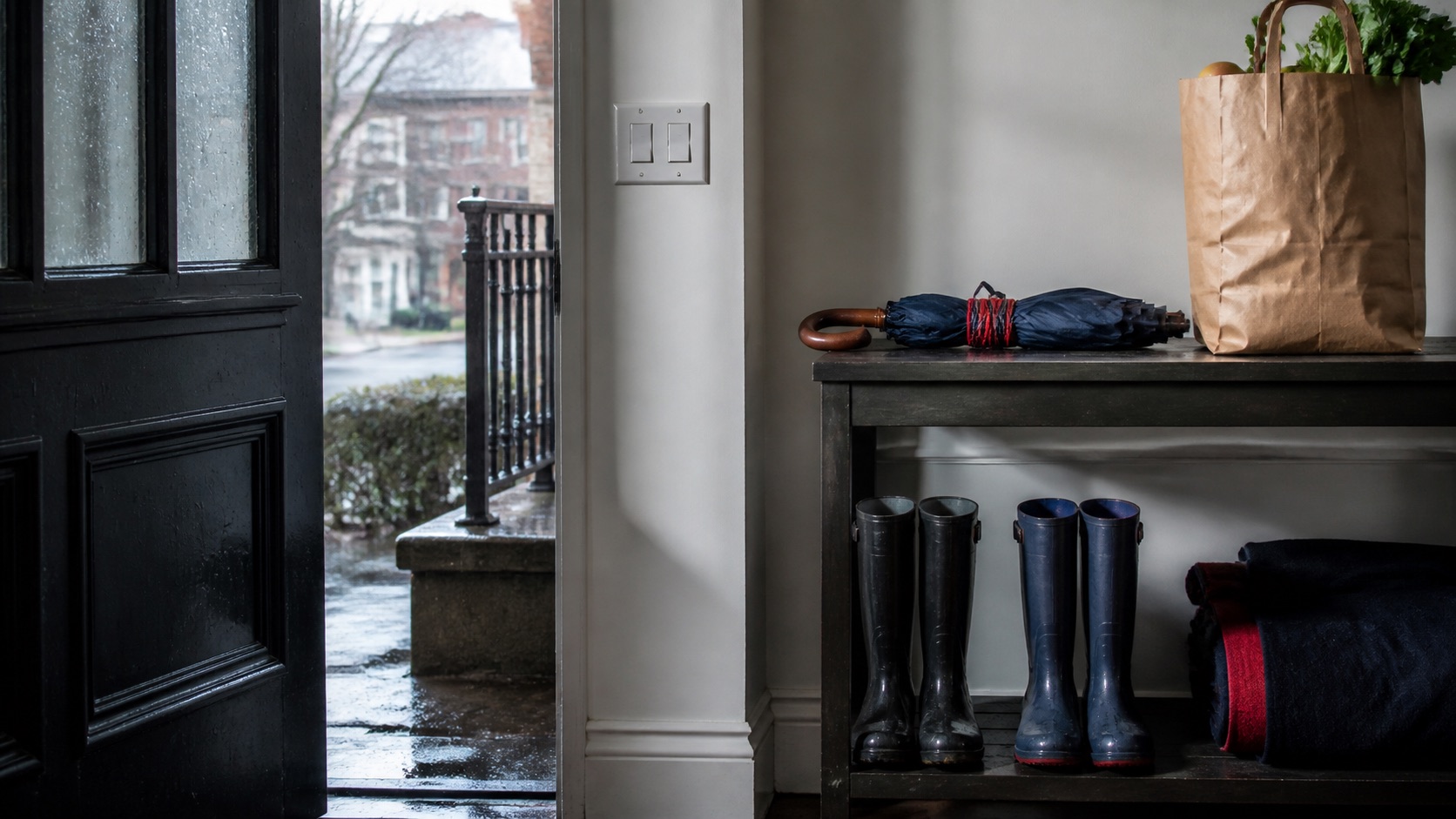
A location becomes specific when viewers can sense how people move through it, what they can access, and what the place asks of them. That specificity is not the same as filling a frame with souvenirs, signage, or instantly recognizable clichés. A room, street, lobby, or screen can feel particular through a few well-observed relationships: the distance between a door and a desk, the way light reaches a counter, the place where shoes collect, or the route someone takes to avoid being seen.
The useful aim is not to prove a setting is real. It is to give the story a world with consequences. A specific location changes how an action is possible, delayed, hidden, or witnessed.
Start with a routine
Routine reveals a place more effectively than a panoramic introduction. Who arrives first? Where do people wait? What has to be moved before another task can begin? In a hypothetical shared house, a narrow hallway may matter because everyone must pass the same drying rack. The rack is not a charming detail; it shapes encounters, minor irritation, and the choices people make about privacy.
Choose one or two routines that the story can revisit. A recurring action gives a viewer an anchor, and later variation lets the setting register change. If someone stops using a familiar entrance, or a usually crowded table is suddenly clear, the location has participated in the story without needing a descriptive speech.
Observe relationships before interpreting them
Visual specificity benefits from a careful separation between observation and interpretation. Observation might be: “The service window is high, the queue bends around a post, and people cannot see the clerk until the last step.” Interpretation might be: “The arrangement makes access feel managed.” The first can be checked; the second can be discussed and revised.
This distinction matters when a project draws from a place or community beyond the immediate team’s experience. A few images cannot stand in for lived knowledge. Research, context, and consultation can improve the work, while invented details should remain clearly fictional. General scenes should avoid pretending to represent a whole city, culture, or class through a single visual shorthand.
Let material details support action
Material cues work when they affect what a character can do. A noisy gate changes how a secret departure is staged. A scratched public table changes where a note can be left. A low ceiling makes a group feel physically close. These are not background facts; they are tools for composition and behavior.
Review the setting at the planned shot scale. Some information can live in a wide establishing view, while another detail must be close enough to read in a short sequence. Do not rely on a viewer pausing the image to find the part that makes the scene work. Place the relevant relation where the story can actually use it.
Resist decorative certainty
A setting can remain partially unknown. Not every wall needs an explanation, and not every object needs a story. The aim is a usable sense of place, not exhaustive worldbuilding. Leaving a few areas open can give viewers room to infer a larger life beyond the frame.
When a location feels specific, it is because the visual decisions recognize that places organize behavior. They hold routines, limits, traces, and routes. Showing a few of those clearly is more persuasive than trying to make every inch of the screen announce where it is.