Production Workflow制作流程 · Guide指南
A Better Way to Review a Rough Cut
Rough-cut review improves when the team watches for story questions first and postpones polish notes until the structure is understood.
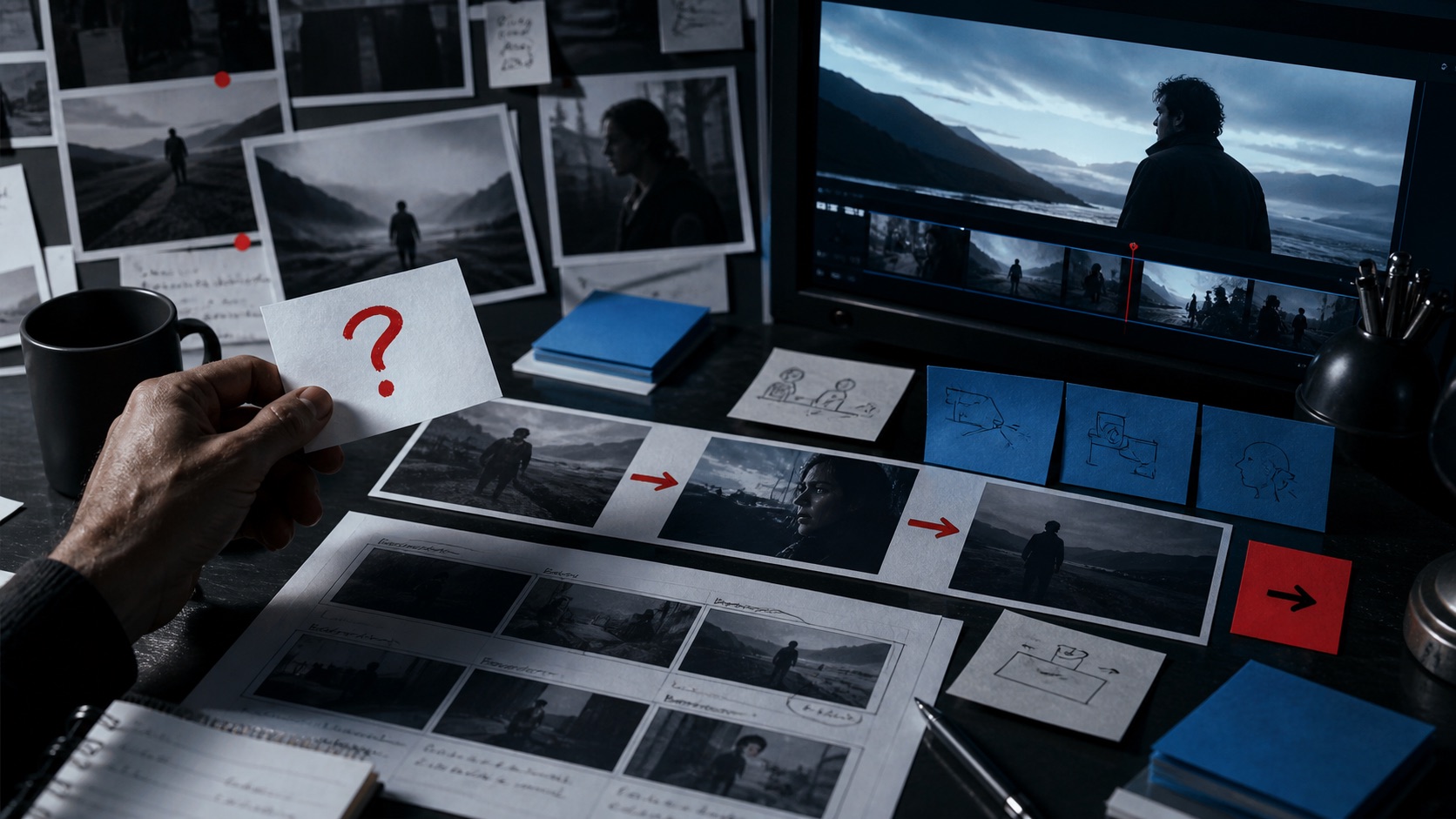
Key takeaways核心要点
- Set the review question before pressing play.
- Watch once without interruption, then discuss from evidence.
- Keep structural decisions separate from finish notes.
A rough cut is evidence about shape, not a promise of finish. It can reveal whether a scene order carries cause and effect, where attention drifts, or whether a relationship is readable. It is poorly served by a review that begins with font choices, temporary sound, or every possible trim. Those comments may matter later, but they can hide the structural question the cut exists to test.
The review becomes stronger when its purpose is explicit. Before sharing the link, the editor or producer should say what remains provisional and what kind of response will help. That gives viewers permission to judge the work at the right level.
Frame the viewing before play begins
Write one or two questions that fit the cut’s current state. A first assembly might ask, “Does the turn in the second scene arrive with enough cause?” A later rough cut might ask whether a revised opening establishes a character’s immediate need. Avoid asking for every response at once; broad requests create broad notes.
Share essential context without explaining away the experience. Mention that music is temporary, a pickup is missing, or captions are not yet placed. Do not narrate every intended effect beforehand. Reviewers need room to report what the cut actually communicates, including places where the intention did not arrive.
For a hypothetical unpublished story clip, a team might watch a four-minute rough cut after being asked only whether the central exchange changes the lead character’s plan. That prompt keeps attention on the causal spine. It is more useful at this stage than a debate about transition style.
Protect the first pass
Let viewers watch once without stopping, unless a safety or technical issue makes that impossible. An uninterrupted first pass captures orientation, anticipation, and confusion in a way that frame-by-frame commentary cannot. Ask participants to jot a timecode and a short observation rather than calling out notes over the playback.
After the first pass, gather impressions before replaying details. Questions such as “What did you think the character wanted by the end of the first minute?” reveal whether the structure read. If accounts differ, locate the evidence in the cut rather than treating the disagreement as a vote.
On a second pass, inspect the moments connected to the review question. Distinguish a note about an observed effect from a suggested solution. A reviewer may identify a late reveal; the editor can then test several ways of addressing it without being locked into the first proposed edit.
Turn discussion into a next version
Sort notes into structural, performance or material, technical, and later polish. Mark which notes require a decision before the next cut and which can wait. A short list of priorities is more actionable than a transcript of the conversation, especially for a small production.
End by naming the next version’s purpose. “v05 will test a revised scene order and hold sound work steady” creates continuity between the review and the edit. If a concern is intentionally deferred, record why, so it is not silently lost or repeatedly reopened.
The trade-off is patience. A focused rough-cut review may postpone satisfying detail work, but it prevents polished surfaces from attaching to an unresolved structure. When the team agrees on what the cut is testing, later craft decisions have a more reliable foundation.