Production Workflow制作流程 · Production Method制作方法
Planning for Alternate Cuts
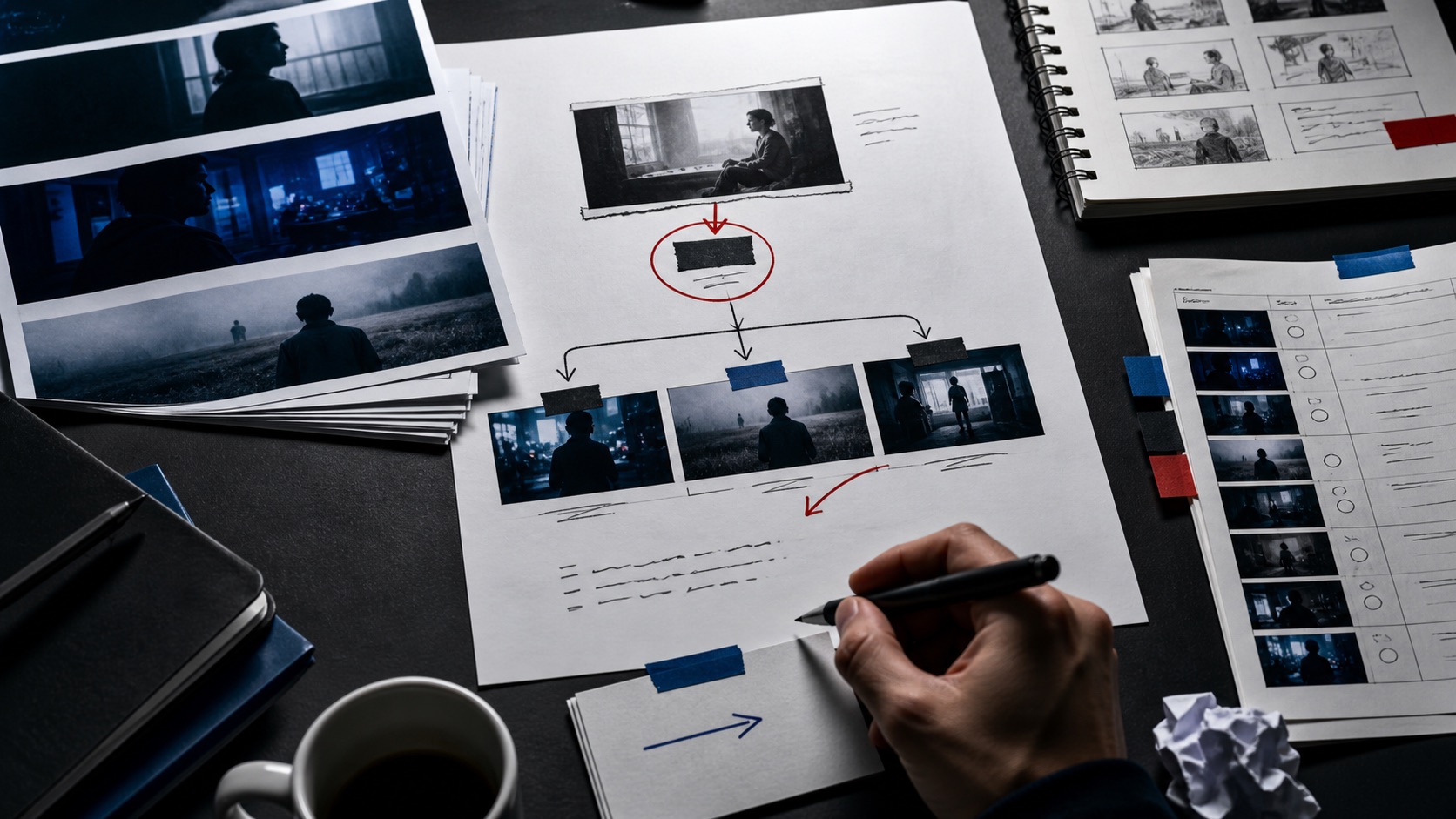
Alternate cuts work best when a team decides what question each branch is meant to answer before it starts editing.
Key takeaways核心要点
- Define the decision that alternatives are meant to test before editing them.
- Keep common material stable so comparison remains intelligible.
- Record why an alternate was retired, selected, or carried forward.
An alternate cut is not automatically a useful experiment. Two exports can look different while answering no particular question, leaving reviewers to debate taste without a shared basis for choosing. Planning alternatives early gives a team a way to test an editorial decision rather than merely multiplying versions.
The goal is not to protect every possibility. It is to identify the few forks that could materially change comprehension, pace, tone, or a delivery requirement. Once those forks are named, the production can preserve the source material and review time needed to examine them.
Define the comparison before the edit
Write a one-sentence decision question for each alternate. It might ask whether a scene should open on reaction or action, whether a key line belongs before or after a reveal, or whether a mobile cut needs a different first beat. The question should be specific enough that a reviewer can answer it without translating a broad prompt such as “which is better?”
Then state what will remain constant: duration range, music bed, selected takes, caption treatment, or delivery format. A comparison becomes unreliable when five variables change at once. It is fine to make a broad exploratory cut, but label it as exploration rather than evidence about a single choice.
Consider a hypothetical unpublished scene with two opening structures. Cut A begins with a door closing; Cut B begins with the person who hears it. Both use the same middle and ending. The review question is whether the second opening gives the relationship enough orientation. The team can discuss a concrete effect rather than defend a vague preference.
Budget alternatives like production work
Alternate cuts consume editorial time, review attention, and storage clarity. Add them to the schedule as deliberate tasks with an owner, a due point, and a stop condition. Without a stop condition, an alternate can become a permanent branch that keeps the primary cut from reaching a decision.
Protect the material that makes a later comparison possible. Keep selected takes, edit timelines, sound choices, and notes linked to each branch. Name branches consistently, such as opening_A and opening_B, rather than treating them as anonymous versions. If a branch uses a distinct assumption, write that assumption beside it.
Limit each review to the intended difference. A reviewer may notice other issues, but those can be captured in a separate note. Mixing unrelated feedback into an A/B decision makes it hard to tell why one cut was selected and turns the next revision into a fresh argument.
Close branches with a reason
After review, mark each alternate selected, retired, merged, or awaiting a new test. Include a brief reason: “B retained because the first relationship reads without added explanation” is more useful than “B preferred.” The note preserves the team’s learning and keeps an old branch from reappearing as an unresolved request.
Retiring an alternate does not mean deleting it immediately. Keep the relevant file and decision record until the project no longer needs it, especially if a later delivery format might reopen the question. But do not let an archived branch sit in the active review folder as if it still needs attention.
The discipline here is selective. If every small trim produces three alternates, comparison becomes its own bottleneck. Plan alternate cuts only where the decision matters, hold their comparison conditions steady, and close them clearly. That makes choice-making visible without turning production into endless branching.