AI ProductionAI 制作 · Opinion观点
How to Keep Generated Work Consistent
Consistency comes from an authored system of choices, not from hoping a sequence of generated outputs will agree by itself.
Key takeaways核心要点
- Define the few visual and narrative constants that each new asset must honor.
- Review work in sequence, where continuity failures become visible.
- Revise the brief and decision record before generating more material.
Consistency is not sameness. A short drama may move from a bright market to a dim apartment and still feel coherent because its point of view, visual priorities, and character relationships remain intact. Assisted generation can produce many individual assets, but it does not automatically maintain those constants across a sequence. The team needs to articulate them, review against them, and revise when a new idea changes the system.
Start by choosing a small set of anchors. For a project, they might include the emotional distance of the camera, the practical source of light, recurring wardrobe facts, the role of empty space, and the way captions will sit in frame. These are not universal style rules. They are project-specific commitments that help reviewers distinguish an intentional shift from a drift in direction.
Make the anchors concrete enough to test
“Keep it cinematic” cannot guide a revision. “Frames remain close to the protagonist’s eyeline until the midpoint” can. So can “public spaces use broad daylight; private scenes use one visible practical source.” Write anchors in terms of effects a collaborator can inspect. Where an anchor depends on a reference board, link the board and preserve its provenance notes rather than relying on memory.
Character continuity deserves the same specificity. Record the details that carry narrative meaning: a damaged sleeve, a work badge, a repeated object, or a change that signals a new day. Do not let surface novelty overwrite those cues. If a new asset alters them, decide whether the story has changed or the asset needs revision. That decision belongs to the people responsible for the narrative, not to a similarity check alone.
Review sets, not single wins
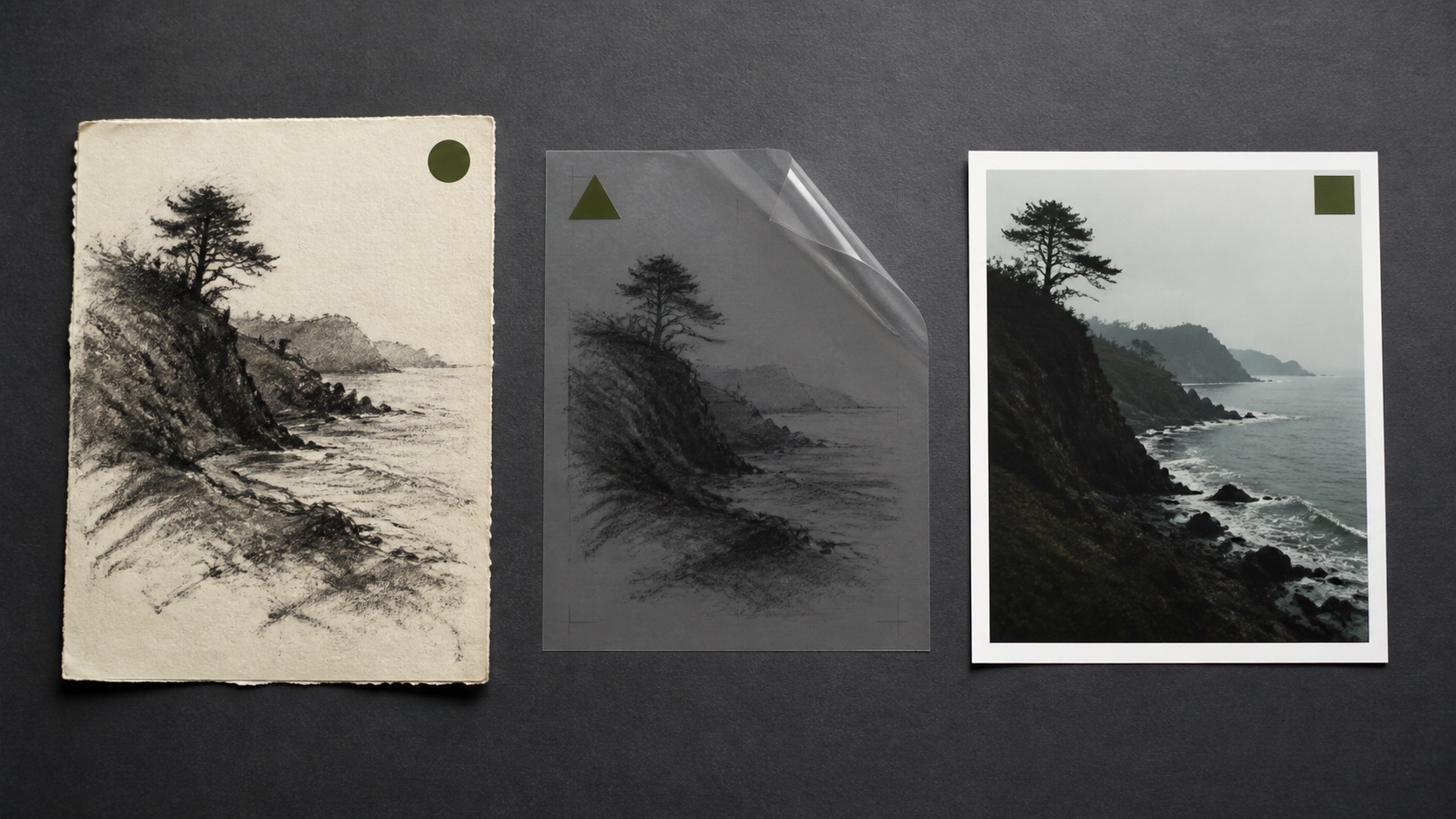
Place new work beside the assets it will meet. A scene that looks convincing alone may clash with the previous shot’s horizon, light direction, or emotional temperature. Sequence review exposes this quickly. It also reveals when a repeated palette has become monotonous, which is a creative issue rather than a defect to be erased automatically.
Imagine an unpublished episode that follows a courier through three interiors. Each generated study may contain warm light, yet the combined strip could make every location feel like the same room. The team might retain the character’s close framing but change the third location’s color and depth so the story can breathe. That is an authored adjustment made through comparison, not a claim that any output is objectively inconsistent.
Revise the system before multiplying outputs
When inconsistency appears repeatedly, stop generating more candidates and return to the brief. Is the anchor too vague? Did the story change? Has a temporary exploration been mistaken for an approved visual rule? Update the decision note, then make a small test set to see whether the revised instruction produces work the team can actually use. This is cheaper and clearer than collecting dozens of near misses.
Consistency is maintained through human attention: writers protect meaning, art direction protects visual purpose, editors protect the relationship between shots, and producers approve what moves forward. Assistance can make alternatives available, but it cannot own that shared standard. A compact, living system of decisions gives the work room to vary without losing itself.