AI ProductionAI 制作 · Explainer解读
Where AI Helps Before the First Draft
Before a script exists, assisted exploration can widen the question; it should never decide what the story means.
Key takeaways核心要点
- Use assistance to map possibilities before committing to a premise.
- Turn every useful output into a question a writer can answer in their own words.
- Keep a short record of what informed the draft and what was rejected.
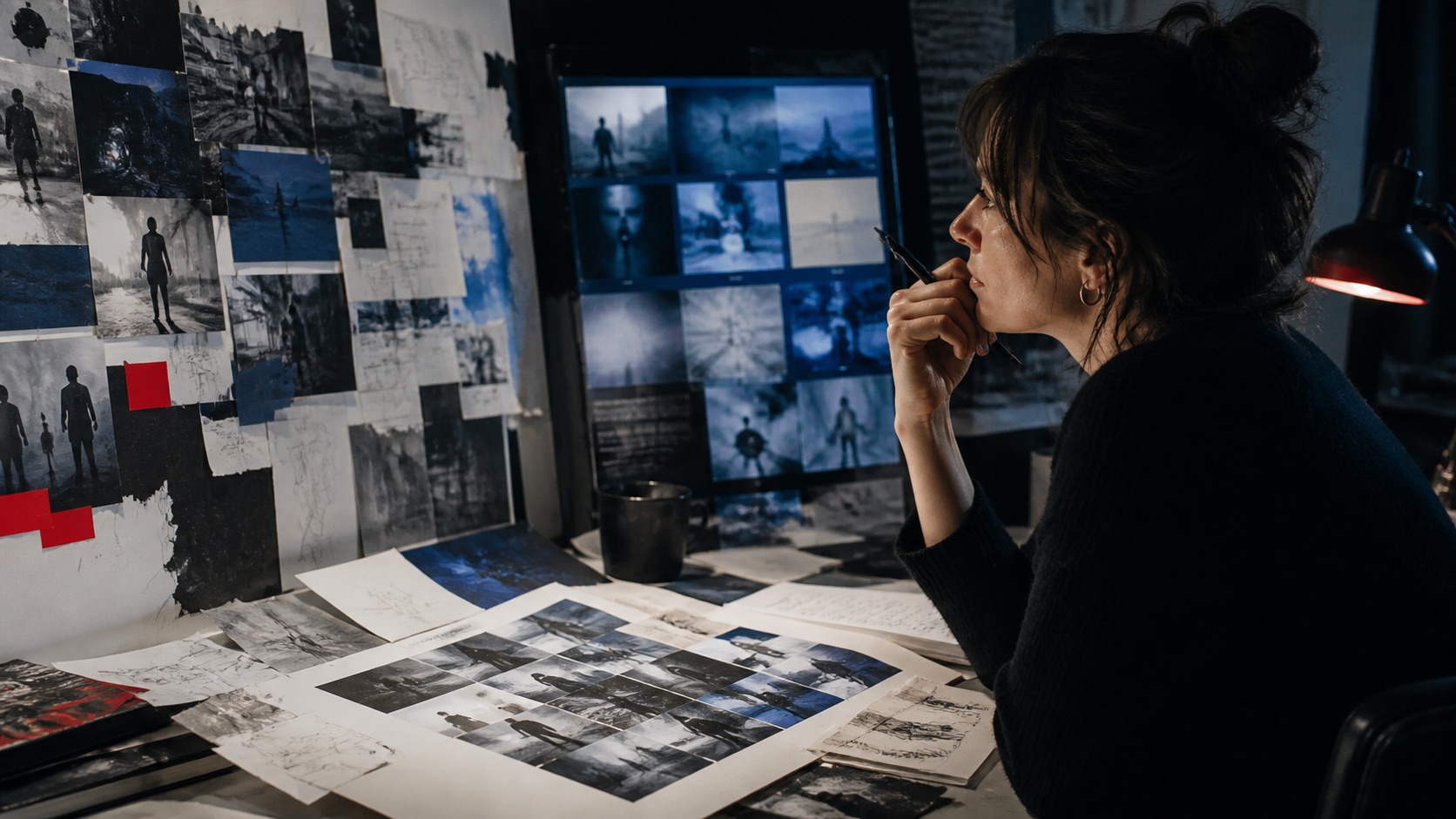
The earliest part of a project is often the least visible and the most consequential. A writer is deciding what kind of pressure belongs in a short drama, whose point of view can carry it, and which details make the premise feel particular. Assistance can be useful here because it creates a fast field of contrasts. It can suggest questions, counter-arguments, setting variables, or ways to name a familiar situation. It cannot establish a reason to make the work. That decision remains with the person who will stand behind the finished story.
The distinction matters because a list of plausible premises can feel like progress. It is only raw material. Before drafting, the productive use of a tool is to expose assumptions that are still vague: Is the central conflict social, emotional, or practical? What does the protagonist want in the next minute rather than in the abstract? Which piece of information must the audience receive late? A human author chooses which of those questions deserves attention, then writes an answer with a specific world in mind.
Begin with a question, not a replacement draft
Give the exploration a narrow brief. Instead of asking for a complete episode, ask for five different sources of friction around a clearly stated situation. Instead of requesting dialogue, ask what each character might be protecting. The resulting options are prompts for thought, not lines to paste into a script. A useful note might read: “The useful contrast is public confidence versus private uncertainty.” That sentence is authored judgment; it is more durable than a block of generated wording.
For example, an imagined mobile drama may begin with a junior chef receiving an unexpected message during service. A pre-draft session could surface choices about timing, witnesses, and stakes. The writer still decides whether the message concerns family, work, or a promise made earlier. They also decide what the kitchen sounds like, what the chef notices, and why the interruption matters today. Assistance has expanded the menu of questions; authorship begins when someone selects, transforms, and owns the answer.
Turn options into a development record
A light record keeps exploration from becoming an anonymous pile. Save the original brief, the few ideas that changed the discussion, and a sentence explaining why they mattered or were discarded. This is not a performance of process. It gives the next collaborator context and prevents an abandoned possibility from returning later as if it were a settled decision. It also makes it easier to distinguish research notes from material that belongs in the draft.
The record should include uncertainty. If a concept rests on a cultural detail the team cannot yet verify, label it as a research question rather than treating a fluent description as confirmation. If a suggestion resembles a remembered film, song, or campaign, pause and replace it with independently developed language. A tool can help organize a research plan, but it is not a source to cite and it is not a substitute for reading, interviewing, or checking primary material where that work is needed.
Keep the first draft human-sized
The next step should be small enough for a person to own: a beat sheet, a character contradiction, or a paragraph describing the opening turn. Write it without asking the tool to smooth every edge. Awkwardness can reveal where the story has not yet earned its emotion. A draft that arrives too polished may hide the very decision that needs discussion.
Use assistance before the first draft to make the room more curious, not to make it noisier. The writer approves the premise, the editor approves its direction, and the team approves any later production choice. Those roles cannot be automated by an inventory of ideas. A good early workflow leaves behind fewer answers than questions—but they are the right questions, held by people who can revise them.