AI ProductionAI 制作 · Opinion观点
Prompting for Options Instead of Answers
A prompt becomes more useful when it produces comparable possibilities rather than pretending to settle a creative question.
Key takeaways核心要点
- Ask for contrasts, constraints, and alternatives instead of a finished answer.
- Compare outputs against a human-written intention statement.
- Choose and revise in the room; a prompt does not approve a direction.
Many creative prompts fail because they ask a tool to act like a final authority. “Write the best opening” sounds efficient, but it hides the question that matters: best for whom, under which dramatic condition, and at what cost? An option-led prompt does something less glamorous and more useful. It asks for several distinct routes through a constrained problem so that a writer, director, or editor can see the choices before making one.
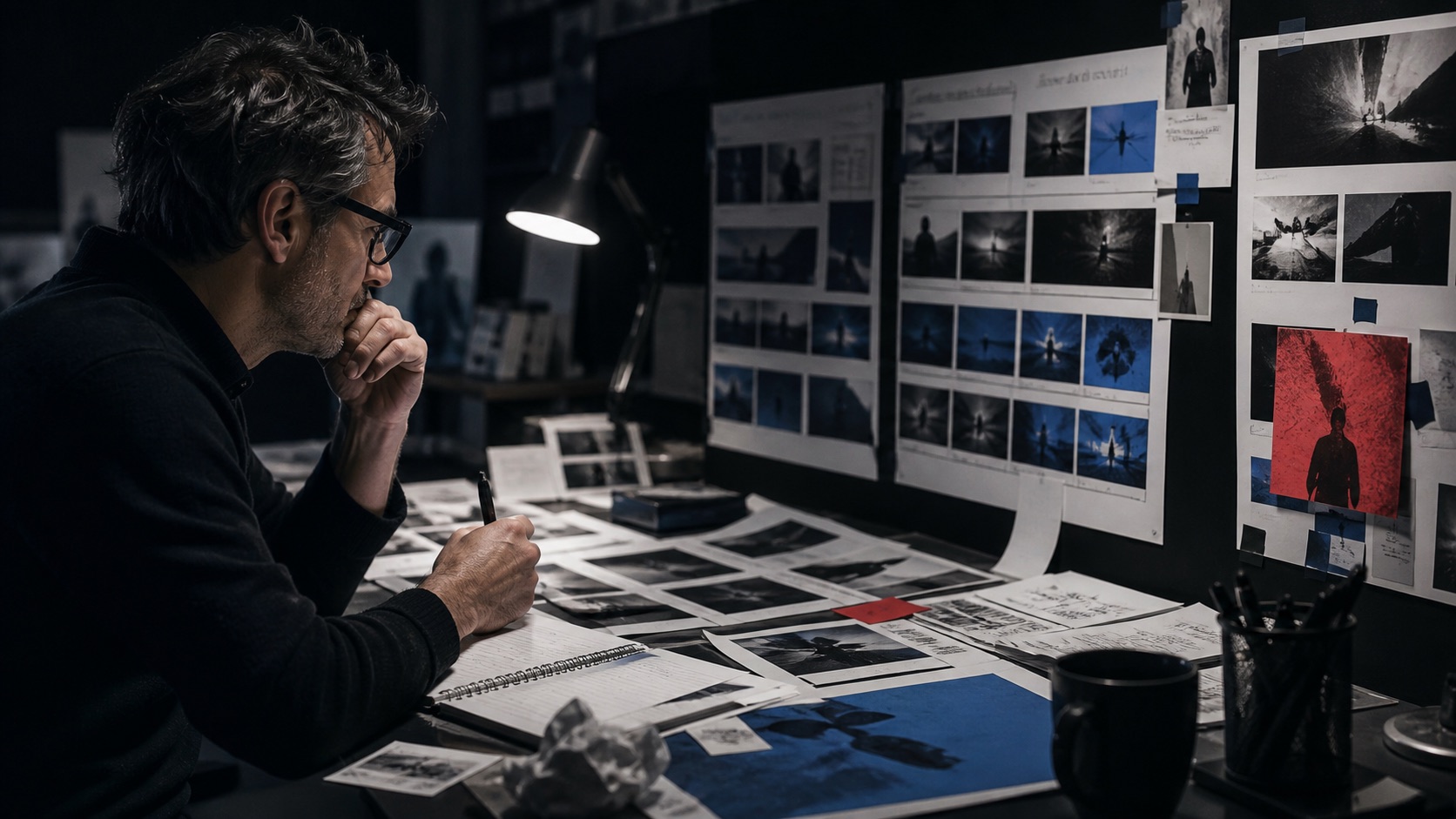
This approach does not turn prompting into authorship. It gives a team material for discussion. The human brief supplies the intention, the limits, and the standards for rejection. The response is a temporary sketchbook. Its value lies in difference: a quiet route, a confrontational route, a visual route, perhaps a route that delays the expected reveal. If the options all sound interchangeable, the prompt has not exposed a real decision.
Frame a comparison that can be judged
Start with a one-sentence dramatic aim written by a person. For an imagined episode, it might be: “The viewer should sense that a favor has become a debt before anyone says so.” Then ask for options that vary one element at a time: the location of the discovery, the witness, the missing information, or the rhythm of the exchange. A useful request specifies what must stay fixed as well as what may change.
Avoid prompts that demand imitation of a living creator, a named film, or a recognizable campaign. A better reference is descriptive: compressed domestic suspense, bright public space with private conflict, dialogue that withholds rather than explains. This protects the room from treating another maker’s voice as a shortcut. It also produces language the team can discuss without confusing influence with duplication.
Read the gaps as carefully as the ideas
Place the alternatives in a simple comparison grid. One column states the intended effect, another describes what changes, and a third lists the risk. The human reviewer asks: Does this option make the character more active? Does it add a fact the story has not earned? Does it make the same emotional promise as the others? An output can be polished and still fail these tests.
Imagine three possible first scenes for a story about a missed train. One starts with a phone call, one with a locked platform gate, and one with the protagonist already on a replacement bus. None is “the answer.” The group may notice that the bus version puts the character in motion but loses the humiliation of being left behind. That observation, not the generated scene, is the useful result. It gives the writer a concrete reason to combine or discard elements.
End the session with a human decision
After comparison, record one choice in plain language: retain the locked gate, remove the phone call, and write the scene from the protagonist’s point of view. Then close the prompt session. Continuing to request variants after a direction is chosen can turn deliberation into avoidance. The next draft should make the selected choice specific through action, rhythm, and detail.
Prompts are strongest when they create a productive fork in the road. They are weak when they conceal who made the turn. The person responsible for the story remains responsible for its meaning, its references, and its final wording. Editors and producers approve the work through their own review process. An option list can support those decisions; it cannot make them on anyone’s behalf.