AI ProductionAI 制作 · Explainer解读
A Small-Team Method for AI Previsualization
Previsualization can help a small team test space and sequence when it is framed as a conversation aid rather than finished imagery.
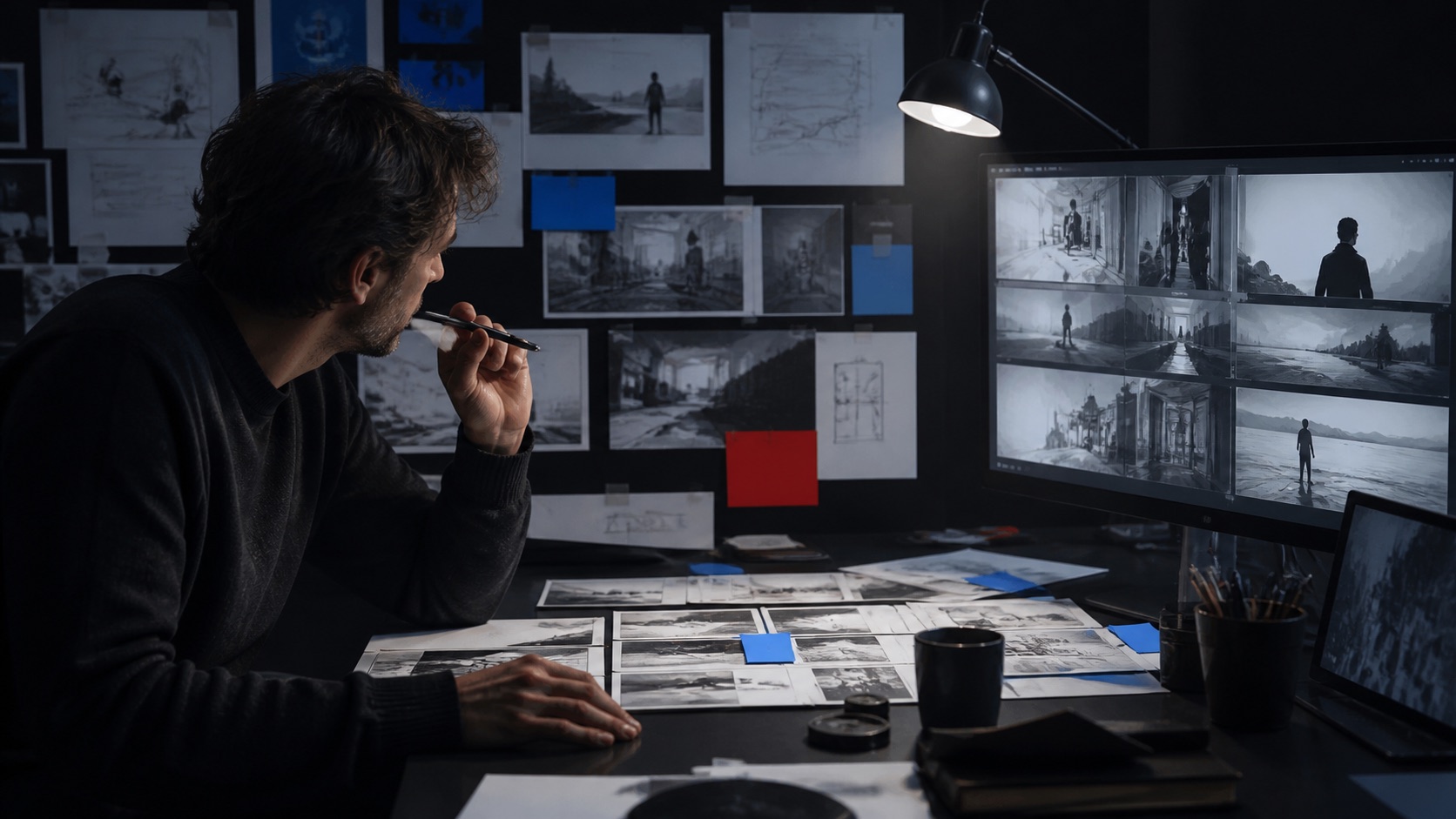
Key takeaways核心要点
- Use previs to test staging, rhythm, and information order—not to declare final art.
- Give each study a shot purpose and a clear provisional label.
- Review sequences together before carrying a visual choice into production.
Previsualization is a way of thinking with images before expensive decisions harden. For a small team, rough studies can reveal whether a scene needs a wide shot, whether a reveal arrives too early, or whether two characters have enough physical separation to sustain a conflict. Assisted image generation can make those studies faster to discuss. It should remain clear that a previs is a planning object, not a promise that the final image, performer, location, or production method will look the same.
The most useful small-team process begins with a shot list written in ordinary language. Each shot gets a purpose: establish the room, conceal the message, show a choice, or let the audience see what one character misses. This gives exploration a sequence to serve. Without it, a collection of attractive frames may never become a scene anyone can edit or shoot.
Build from beats, not isolated pictures
Take one beat at a time and state what changes. An imagined argument in a parked car may need five studies: the sealed interior, an interrupted glance, a phone screen turned down, the person outside the car, and the aftermath. The goal is not to make five perfect pictures. It is to test whether the information can travel from one moment to the next without dialogue carrying every burden.
Keep the variables narrow when comparing options. If the question is whether the phone should be visible before the argument, hold the location and character positions steady. A visual test is easier to discuss when everyone knows what changed. Mark each file as previs and include the beat number, version, and reviewer so it cannot be confused with final design work.
Review the sequence in order
Look at frames as a strip, not just one at a time. Ask where attention lands, what a viewer knows after each image, and whether screen direction or lighting produces a false connection. A script supervisor, director, editor, or writer can each notice a different issue. Small teams do not need a large committee; they need the right conversation before the work is carried forward.
For example, a hypothetical sequence may show a character entering a library, spotting a familiar bag, and deciding not to approach it. The team may discover that the bag needs to appear earlier for the final hesitation to read. That is a staging insight. The image study did not author the scene or approve the choice; the human group used it to see a problem sooner.
Convert the insight into a production instruction
After the review, write the decision in a form that survives the image: “Introduce the bag in the establishing view; preserve an empty aisle between the characters.” A designer, cinematographer, or editor can then interpret that instruction through the actual resources and context of the project. If the instruction is no longer possible, reopen it as a human decision rather than forcing the final work to mimic a rough study.
Previsualization earns its place when it reduces uncertainty about story space. It should not smuggle in unreviewed references, pretend to settle casting or locations, or become final art by default. People remain authors of the sequence and approvers of each later asset. The tool’s role is temporary: make a question visible enough for the team to answer.