AI ProductionAI 制作 · Analysis分析
The Questions to Ask of an AI Image
Before an AI-assisted image enters a sequence, its story function, visual clarity, and provenance all deserve separate questions.
Key takeaways核心要点
- Ask what the image makes a viewer understand before asking whether it is attractive.
- Inspect continuity, framing, and unintended detail at the intended viewing size.
- Keep provenance and approval questions separate from aesthetic preference.
An image can be striking and still be wrong for a scene. It may lead the eye away from the character, imply a social setting the script does not support, or introduce a detail that changes the audience’s reading. That is why image review should begin with questions rather than applause. The method used to make an image does not alter its responsibility to the story; it simply adds another set of records and review points.
The first reviewer should know the image’s intended job. Is it establishing a location, carrying a transition, offering a close emotional detail, or serving as a temporary previsualization aid? A job statement prevents the team from trying to judge every candidate by the same standard. A modest background can succeed if it gives an actor room; a beautiful hero image can fail if it announces the wrong genre.
Ask what the frame tells the viewer
Start with meaning. What will a viewer likely notice first? What relationship does the framing imply? Is there a visual fact that the following shot contradicts? Look for accidental symbols as well as intended ones. A prominent locked door, expensive object, or uniform may carry narrative information whether or not the team planned it.
Then examine geography. Does the character have a plausible place to stand? Do doors, windows, and light sources make sense from one shot to the next? Does the composition leave a safe area for captions if the format needs them? These are not questions about abstract realism. They are questions about whether the image can do useful work inside a sequence.
Inspect surface details without losing the scene
At full size, check hands, text, reflections, furniture, repeated patterns, and edges. At small size, check whether the focal point survives. A reviewer should also test the image beside its neighboring shots, because continuity often fails in the cut rather than in isolation. If an error is harmless in a rough study, label the study accordingly. Do not let “temporary” become a reason to stop noticing it.
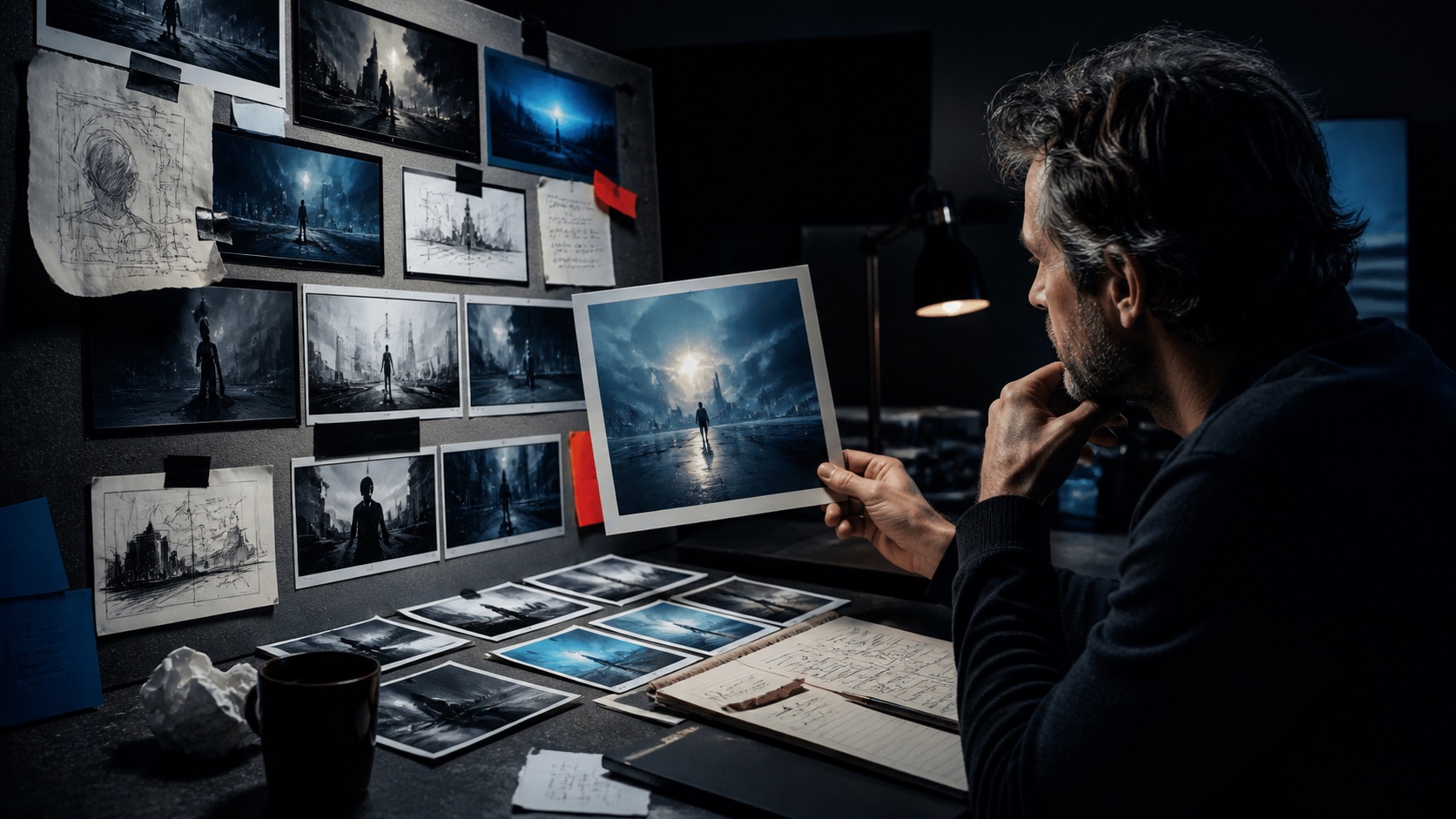
Imagine an unpublished visual board for a character waiting in a laundromat. One candidate has a compelling pool of light but puts a bright sign directly behind the character’s face. Another has less dramatic light but gives the scene a clear waiting area and preserves the emotional distance described in the script. The team may choose the second, revise the first, or use neither. The decision belongs to the human reviewers who can explain the story consequence.
Check the route into the project
Ask where the image came from, what brief and references shaped it, and whether the record supports the intended use. If the asset draws on a board with unclear source status, pause it for review. If the image is a study only, record that status. If it is moving toward a final edit, identify the person who approves that move and the version being approved.
No checklist can replace taste, but good questions make taste discussable. They keep a team from treating technical polish as narrative proof and from treating an output as self-authorizing. People author the scene, decide what belongs in it, and approve the finished use. The image is accountable to those choices, not the other way around.