Short Drama短剧 · Guide指南
The Difference Between Speed and Rush
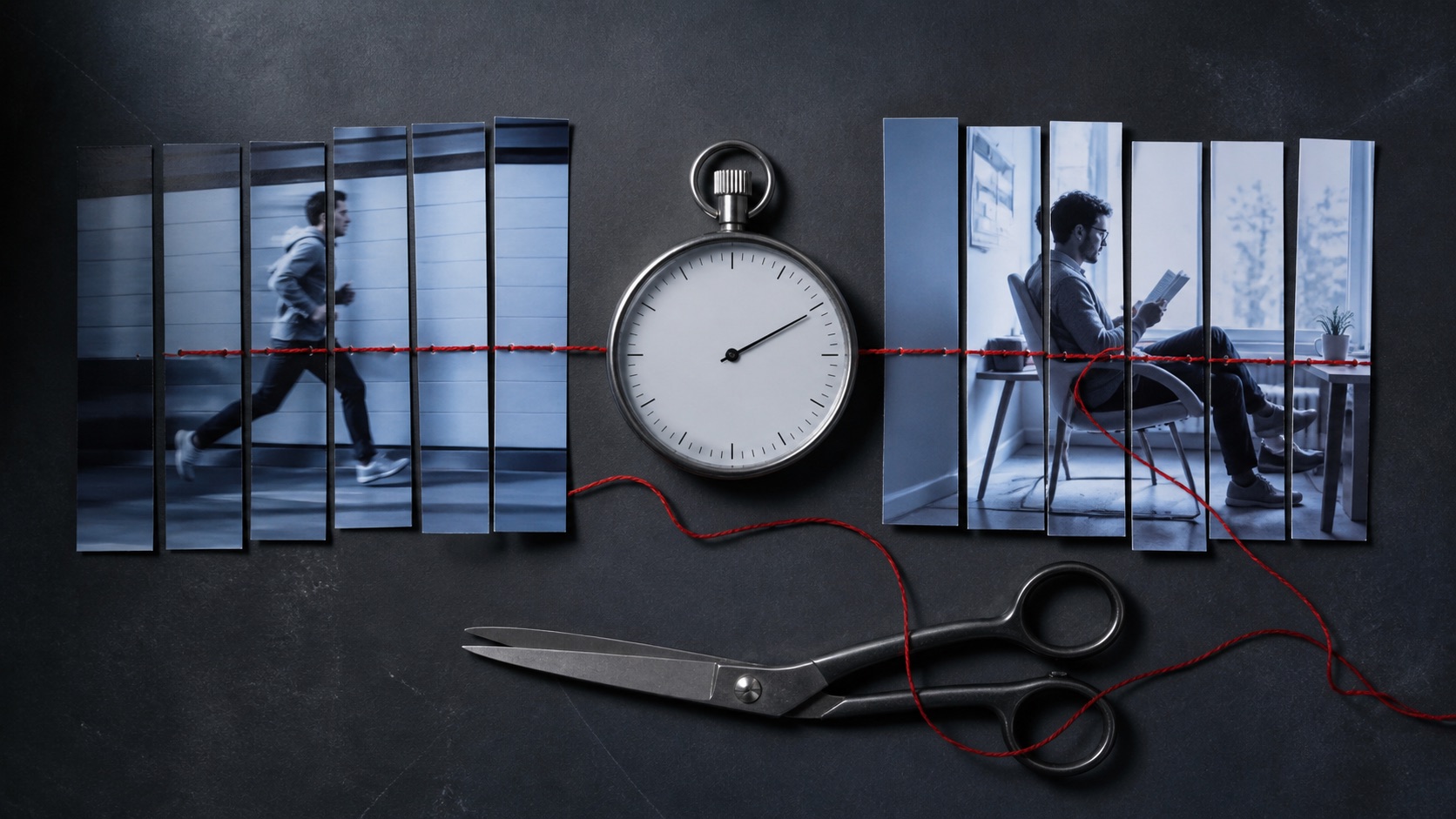
Fast short drama stays clear because every cut carries a decision. Rushed drama merely removes the information that makes a decision matter.
Key takeaways核心要点
- Treat pace as the rate of meaningful change, not the number of cuts.
- Give viewers one stable orientation point before escalating a scene.
- Use a held beat when a character must understand the cost of an action.
Fast is not the same as hurried. A short episode can move through several actions in a minute and still feel easy to follow when each action changes a clear situation. Rush appears when the viewer is asked to absorb new names, motives, places, and reversals before any one of them has become useful. The distinction matters on a small screen, where a person may be watching between other tasks and cannot rely on a long recap to restore context.
Pace comes from cause and effect. A message arrives, someone recognizes its implication, and their next choice narrows the room for escape. That sequence can be brief. What it cannot be is interchangeable. If the message could be replaced by any message and the response would stay the same, the scene has movement but not direction.
Count changes, not shots
A rough edit can look lively because it contains constant camera movement, music cues, and cutaways. None of those elements guarantees momentum. During a script pass, mark the moments when a character’s available options actually change. Those marks are the engine of speed. A chase may contain one such change; a quiet exchange at a bus stop may contain three.
Consider a hypothetical episode in which a student must return a borrowed access card before a library closes. The student reaches the desk, sees that the card reader is broken, and decides to use a staff entrance instead. The guard recognizes the student. Three compact changes occur: the easy plan fails, a riskier plan is chosen, and the risk becomes personal. The scene can be cut briskly because its chain is legible.
By contrast, showing the student running through three corridors, checking a phone, receiving unrelated messages, and arriving at a new location may feel busy while delaying the same decision. Speed is often gained by removing transitions, not by adding incidents.
Protect one point of orientation
Before a scene accelerates, give the audience something dependable: who wants what, where the boundary is, or what will happen if the effort fails. One line, a visible object, or a simple rule can do the work. The point is not exposition for its own sake; it is a handle that lets later reversals register.
In a two-person argument, the orientation might be a packed suitcase by the door. Once the audience sees it, a glance toward the suitcase can carry more information than another explanation about leaving. In a workplace scene, it might be a timer visible on a monitor. The scene can then move quickly around a shared, concrete pressure.
The same principle helps editors judge whether a transition is too abrupt. If a viewer needs to ask where the characters are, what they are trying to do, and why the new detail matters all at once, slow the entrance by a beat. That does not mean adding a broad establishing sequence. It can mean holding on a hand that hesitates before pressing a button.
Let comprehension have a beat
Some moments need air because the character’s understanding is the event. A revelation cut directly to the next location may be efficient in runtime and expensive in feeling. A half-second reaction, an interrupted reply, or a changed posture can show that the information has landed. It also tells the audience which interpretation to carry forward.
This is especially useful after a reversal. If a friend says, “I never sent it,” the next image should not automatically be a new plot point. First ask whose plan has just collapsed and what that person now knows. Holding the person long enough to make a revised choice turns a line of dialogue into a story event.
Revise for a playable next action
When a sequence feels sluggish, do not assume every pause is the problem. Identify the first beat that leaves the next action unchanged. It may be a repeated explanation, an arrival shown from too far away, or a reaction that adds no new understanding. Cut that beat first. When a sequence feels confusing, restore the missing cause instead of slowing every cut.
The useful target is not maximum velocity. It is a viewer who can answer, without stopping the episode, what just changed and what the character is likely to try next. That clarity makes a short drama feel fast because attention is continually moving forward with the story rather than catching up to it.