Creator Economy创作者经济 · Production Method制作方法
The Case for Showing Process Carefully
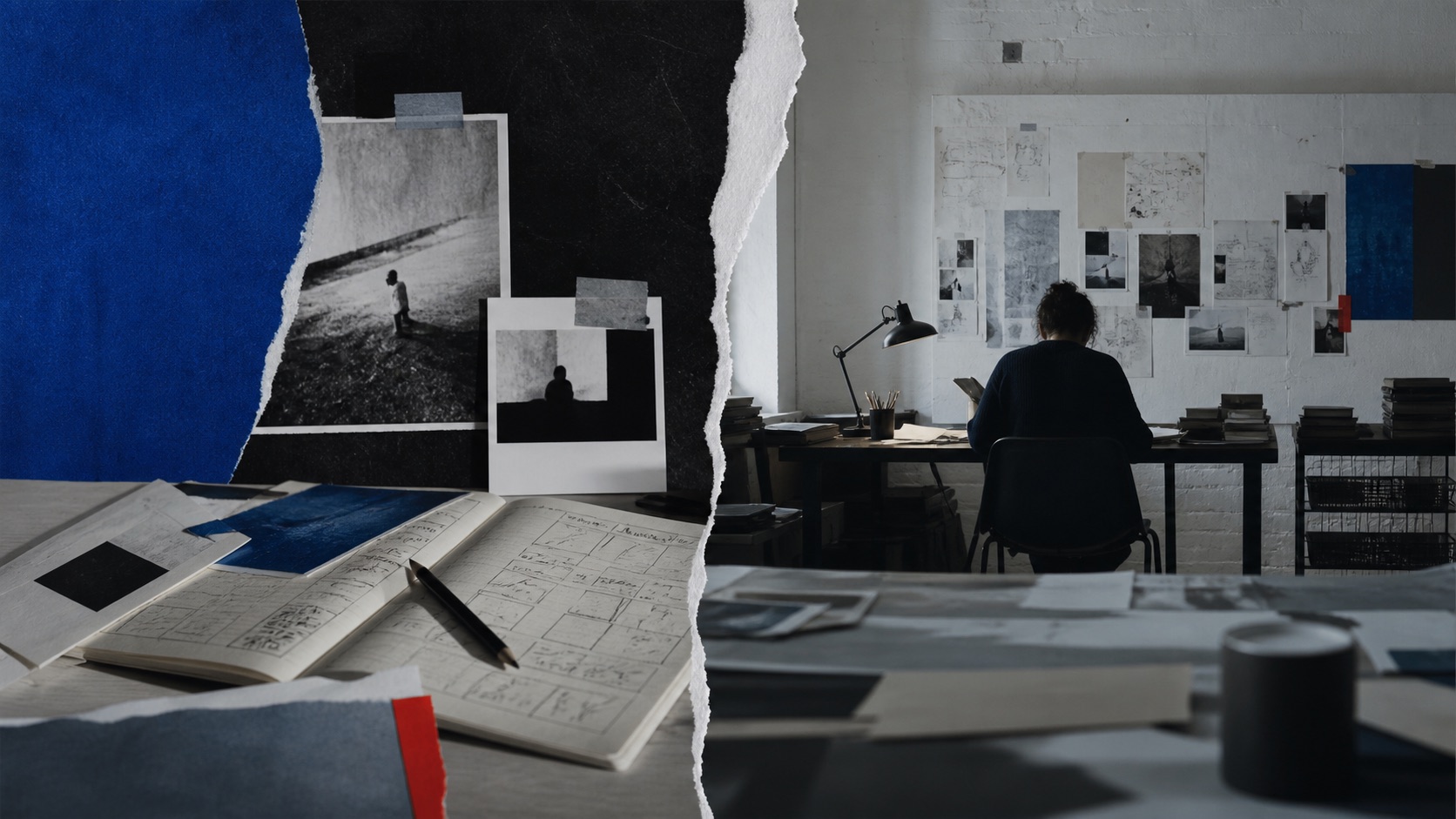
Process sharing can build understanding when it reveals decisions without turning unfinished work or collaborators into content.
Key takeaways核心要点
- Share process to explain a decision, not to simulate constant access.
- Check permissions and privacy before showing material involving others.
- Choose a useful level of detail for the audience and the stage of work.
Showing process can make creative work easier to understand. A draft comparison, a short note about a revision, or a diagram of a production choice can reveal that finished work is built through decisions rather than appearing fully formed. Yet process is not automatically public material. It may contain private collaboration, unfinished thinking, source material that cannot be shared, or a moment that is clearer after the work is complete.
The useful question is not “should process be shown?” It is “what understanding will this particular glimpse create, and what does it expose?” A careful answer can let a creator be generous without treating every stage of work as a performance.
Share a decision, not everything
The strongest process note usually centers on one choice. A creator might show how an opening was shortened to clarify the immediate conflict, or explain why a visual reference was removed because it distracted from the subject. This gives an audience a concrete lesson in judgment. It is more useful than a stream of fragments whose purpose is unclear.
An imaginary post about a script revision could show two neutral lines and explain that the second version makes the relationship legible sooner. It does not need to reveal the entire draft, private notes, or every alternative considered. The amount of material should be enough to support the point and no more.
Check the boundary around the material
Before sharing, ask who appears in the process and what expectations surrounded the work. A collaborator’s early idea, a client’s internal brief, or a participant’s image may not be yours to publish. Seek the appropriate permission where it is needed, and choose a different example when uncertainty remains. This is a practical care step, not a legal assessment.
Also consider timing. Some decisions are easier to explain after release, when the project no longer depends on surprise or an active negotiation. Others can be recreated as a general diagram rather than shown from the original material. A careful process practice protects both relationships and future creative freedom.
Make the audience’s use clear
Say what a reader can take from the process note: a question to ask in their own brief, a way to compare two drafts, or a reminder to name a constraint. Avoid presenting a single method as a rule for every project. Context is part of the lesson.
Process sharing is valuable when it turns invisible judgment into a useful, bounded explanation. It becomes less valuable when it substitutes access for insight. By choosing one decision, checking the surrounding permissions, and explaining the intended use, creators can show how work develops while keeping the work itself properly cared for.
Careful sharing also makes it possible to change your mind. A process note can say that a first approach was abandoned, explain the limit of the example, and leave room for a future method to differ. That honesty is more instructive than a polished retrospective that makes creative work appear linear. The point is not transparency as a performance; it is a useful account of judgment.